Posts

Why ANOVA Matters: Exploring its Significance in Data Analysis?
Image
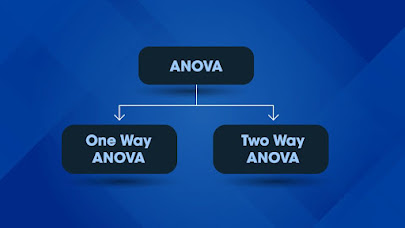
  ANOVA, or Analysis of Variance, is a powerful tool used in data analysis. It can help identify the differences between two sets of data and determine which set has more significant variation. ANOVA is widely used in scientific research to test hypotheses about populations and to compare different treatments on samples from those populations. At its core, ANOVA works by comparing the variance within each group with the variance between groups. If there’s a large difference between these two variances then it suggests that there’s something interesting going on – either an effect due to one group being different from another or even an interaction effect where both groups are contributing something unique together that isn't present when they're examined separately. In addition to helping researchers draw meaningful conclusions about their studies, ANOVA also helps marketers understand how their customers interact with products and services across various segments like age...

Problem-Solving Excellence: The Benefits of 7 QC Tools Training

Image
  Problem-solving excellence is a critical component of any successful business. It involves the use of various tools and techniques to identify, analyze, and solve problems in an efficient manner. One such tool that has been proven to be effective for problem-solving excellence is 7 QC Tools Training . This training provides organizations with a comprehensive set of strategies for identifying root causes, analyzing data, and developing solutions that will help them achieve their desired outcomes more quickly and effectively. The 7 QC Tools are designed to help businesses identify potential issues before they become major problems by providing detailed information about processes or products being used in the organization’s operations. The seven tools include check sheets, cause-and-effect diagrams (also known as Ishikawa diagrams), control charts, histograms Pareto Charts scatter plots, flowcharts, and stratification graphs. Each tool can provide valuable insights into how proce...

Getting Started with 5S Training: The Basics of Lean Organization

Image
  5S training is a lean manufacturing tool that can help businesses become more organized and efficient. It’s based on five key principles: Sort, Set in Order, Shine, Standardize, and Sustain. When used correctly it can have a significant impact on the efficiency of an organization by reducing waste and improving safety. The first step to getting started with 5S training is understanding what each principle means: Sort – This involves categorizing items into those needed for daily operations and those that are not necessary or rarely used; this helps reduce clutter in the workplace. Additionally, sorting makes it easier to find items when they are needed quickly which reduces wasted time looking for them later down the line. Set In Order – This refers to organizing all equipment according to its purpose so everything has its own place; this also allows employees to see at a glance where something should be stored after use instead of leaving it scattered around randomly th...

A Step-by-Step Guide to Getting Started with Process Capability Training

Image
  Process capability training is a valuable tool for any organization striving to improve its processes and increase efficiency. It can help identify areas of improvement, reduce costs, and ensure that products meet customer requirements. However, getting started with process capability training can be daunting for those unfamiliar with the concepts involved. To make the transition easier, here’s a step-by-step guide to getting started with process capability training : Step 1 : Understand Process Capability Training Basics The first step in understanding how to use process capability training is learning about its basic principles. Processes must have certain characteristics such as stability and repeatability to achieve desired outcomes consistently over time; these are referred to as “process capabilities” or “capabilities” for short. By measuring these capabilities through data collection techniques like statistical analysis or control charts, organizations can better under...

5 Key Benefits of Measurement System Analysis Training

Image
  Having a well-trained staff in the measurement system analysis (MSA) process is essential for any organization. With measurement system analysis training, employees can better understand and apply the principles of statistical process control to improve products and processes. Here are five key benefits of measurement system analysis training : 1) Improved Quality : By understanding how to use statistical methods like Gage R&R studies, ANOVA tests, capability indices, etc., employees can identify sources of variation that may be affecting product quality or performance levels. This allows them to take corrective action before problems occur or become more severe over time. 2) Increased Efficiency : With an effective MSA program in place, organizations will be able to reduce waste and maximize efficiency by identifying areas where improvements need to be made quickly and effectively without compromising on quality standards or timelines set out at the start of production c...

Why DOE Training Is Essential for Data-Driven Decision-Making?

Image
  Data-driven decision-making is the process of using data to inform decisions. It’s a powerful tool for businesses, as it allows them to make informed and accurate decisions that are based on facts rather than gut instinct or guesswork. However, in order for data-driven decision-making to be effective, organizations need employees who understand how to use and interpret the data they have available. That’s where design of experiments training comes in. DOE stands for Design of Experiments (DOE) and it is a methodology used by many businesses when analyzing their own processes or products with an aim towards improvement or optimization. The goal of DOE training is twofold: firstly, it provides employees with the knowledge necessary to effectively analyze existing processes; secondly, it teaches them how best to utilize this information when making decisions about those same processes going forward into the future. In short – without proper DOE training your team won't have acc...

The Building Blocks of Success: TPM Training Essentials

Image
  Success in any field is the result of hard work, dedication, and a commitment to excellence. But what else can you do to ensure success? The answer lies in TPM Training Essentials. TPM stands for Total Productive Maintenance and it’s an essential part of achieving success in any business venture. It focuses on preventive maintenance techniques that help reduce downtime, increase productivity, improve quality control measures, and ultimately lead to greater profitability for your organization. TPM Training Essentials provides a comprehensive overview of how TPM works as well as its key components such as planning & scheduling; equipment reliability & availability; safety management systems; environmental considerations; inventory control systems etc., which are all integral parts of successful production operations within organizations today. With this training program participants learn how best to utilize these tools along with their own knowledge base when implemen...